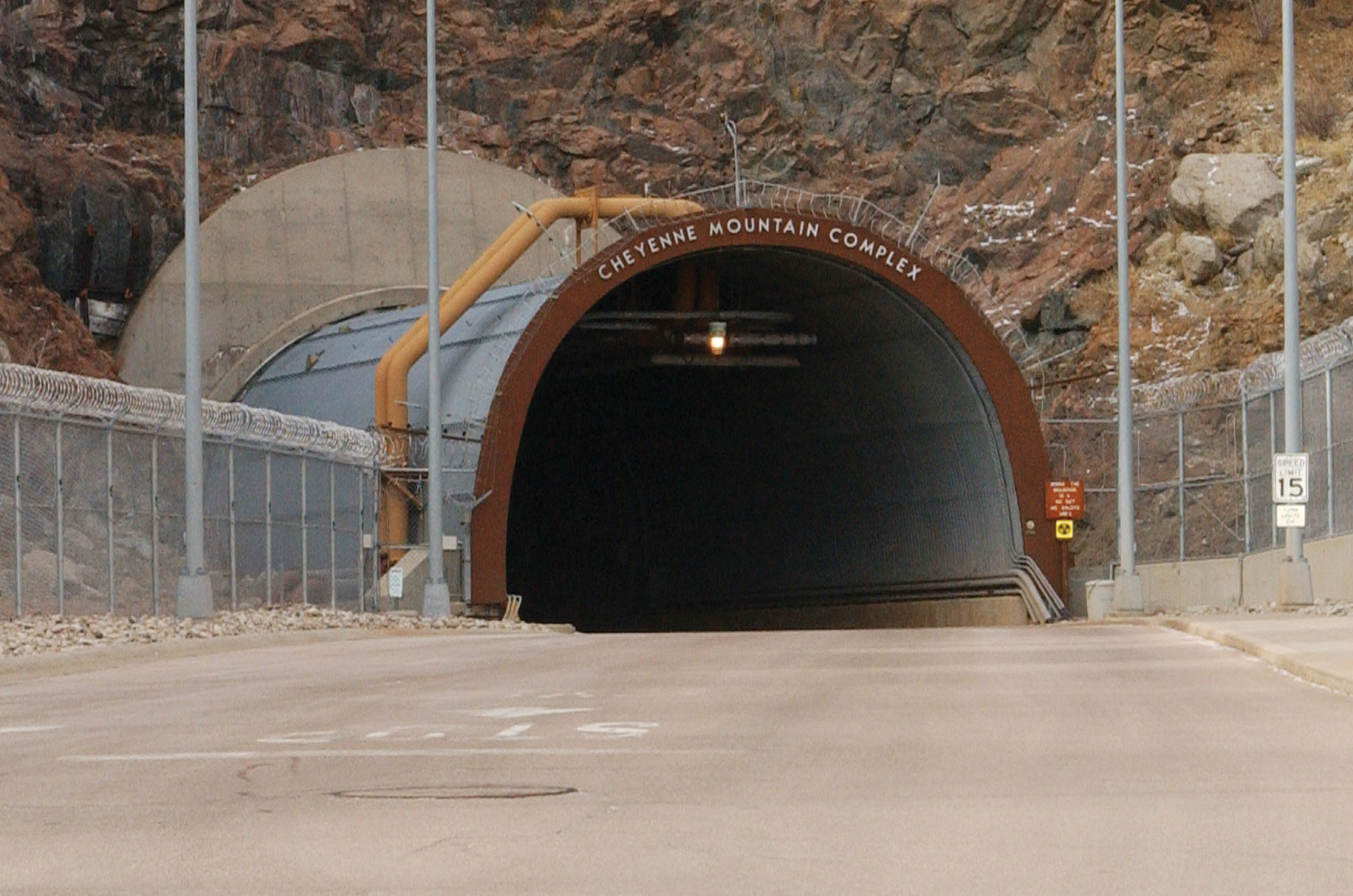
The North American Air Defense Command, or as NORAD was known in those days, was a brainchild of the Joint Canadian-U.S. Military Group in 1956. The recommendation was then approved by the U.S. Joint Chiefs of Staff in February the following year and formally announced in August. A month after the announcement, NORAD moved in their new command station, the Ent Air Force Base’s 1954 blockhouse.

Image source: norad.mil
In 1958, the U.S. and Canada agreed on a few things. First, the NORAD commander was to be a U.S. officer, with a Canadian vice-commander. The primary purpose of NORAD was established as an early warning and defense for SAC’s retaliatory forces. Later that year, Canada and the U.S. began the Continental Air Defense Integration North (CADIN). This would be for the Semi-Automatic Ground Environment air defense network. The entire command would need over $5 billion to remain operation yearly. This was justified by the Nike Zeus program and the development of Ballistic Missile Early Warning System sites.
The construction of the NORAD bunker at Canada’s CFB North Bay started in 1959 and completed in 1963. Along with this, the USAF had eight smaller combat control central systems that gave NORAD the capability to command the entire U.S. air defense.

Image source: Wikipedia.com
The Cheyenne Mountain nuclear bunker became the headquarters for the U.S. NORAD in 1960.
Aerospace defense expert Scott Beale was Senior Vice President of Sales and Corporate Development of Tempus Applied Solutions. For more articles on the aerospace defense industry, follow this blog.